Skip to content


Living with rosacea means learning your triggers: heat, sun, spicy food, a glass of wine, a stressful week. Even with careful management, redness and flushing can arrive without warning. Red light therapy for rosacea offers a gentle, non-invasive way to support calmer, more resilient skin, working at the cellular level rather than on the surface alone.
This guide covers what drives rosacea redness, how red light therapy supports rosacea-prone skin, who it suits best and how to build a safe, effective routine at home.
What Drives Rosacea Redness & Flushing
Rosacea is a chronic inflammatory skin condition, most often appearing across the cheeks, nose, chin and forehead. Three factors work together to keep it active:
- Chronic inflammation: an overactive immune response in the skin keeps inflammatory signals running, even between flares.
- Vascular reactivity: blood vessels near the surface dilate easily and stay dilated, creating persistent redness and visible vessels.
- A compromised skin barrier: a weakened barrier lets irritants in and moisture out, making skin more reactive to everyday triggers.
Each factor feeds the others. Inflammation weakens the barrier, a weaker barrier reacts to more triggers, and every reaction fuels more inflammation. Breaking that cycle is the key to calmer skin, and it's exactly where red light therapy comes in.
Does Red Light Therapy Help Rosacea?
Yes. Red light therapy addresses all three drivers of rosacea at once. Red wavelengths between 630 and 660nm down-regulate the pro-inflammatory cytokines that keep rosacea-prone skin reactive, while also supporting collagen production and skin barrier integrity.
The result is a calmer baseline: less day-to-day reactivity, softer redness and greater resilience to triggers. Results build gradually with consistent use, which is why a steady weekly routine matters more than any single session.
How Red Light Therapy Supports Rosacea-Prone Skin
Calming inflammation
Red light is absorbed by the mitochondria in your skin cells, helping them produce more energy and moderating the inflammatory signals that drive rosacea. As that chronic signal quiets, skin becomes less prone to flaring. Learn more about how red light therapy reduces inflammation.
Softening vascular reactivity
Much of rosacea's persistent redness comes from reactive blood vessels near the surface. As inflammation settles with consistent sessions, those vessels become less reactive, and baseline redness and flushing soften along with them.
Strengthening the skin barrier
A stronger barrier is a calmer barrier. By supporting collagen and the skin's natural repair processes, red light therapy helps rosacea-prone skin hold moisture and resist irritants. That creates a positive cycle: a stronger barrier means fewer reactions, fewer reactions mean less inflammation, and less inflammation means calmer skin overall. Read more about red light therapy for skin health.
Gentle on heat-sensitive skin
Heat is one of the most common rosacea triggers. LED red light therapy panels deliver light rather than heat at the recommended distance, making them well suited to heat-sensitive skin. Sessions are comfortable, quiet and free of active ingredients that reactive skin may reject.

Is Red Light Therapy Good for Rosacea? Who It Suits Best
Red light therapy suits most people with rosacea-prone skin, and it's especially well matched to:
- Persistent redness & flushing: the most common form of rosacea, where calming inflammation and vascular reactivity makes the biggest difference.
- Sensitive, reactive skin: skin that stings or reddens with new products benefits from an ingredient-free approach that supports the barrier.
- Bumps & breakouts: red light's calming effect supports skin prone to rosacea-related bumps alongside your dermatologist's guidance.
If you're experiencing rosacea for the first time, or your symptoms affect your eyes, see a dermatologist first to confirm the diagnosis and build a plan that's right for you.
Red Light Therapy & Other Light Treatments for Rosacea
Light treatment for rosacea comes in a few forms, and each plays a different role.
In-clinic treatments, such as intense pulsed light (IPL) and vascular lasers, are delivered by dermatologists and target visible blood vessels directly over a short series of appointments.
At-home red light therapy works on the underlying drivers of redness, supporting calmer, more resilient skin day to day. Because sessions are gentle and take only minutes, they fit easily into an ongoing routine.
The two work beautifully together. Many people use in-clinic care to address visible vessels and at-home red light therapy to maintain a calm baseline between appointments. Speak with your dermatologist about combining approaches.
Calmer skin, from home
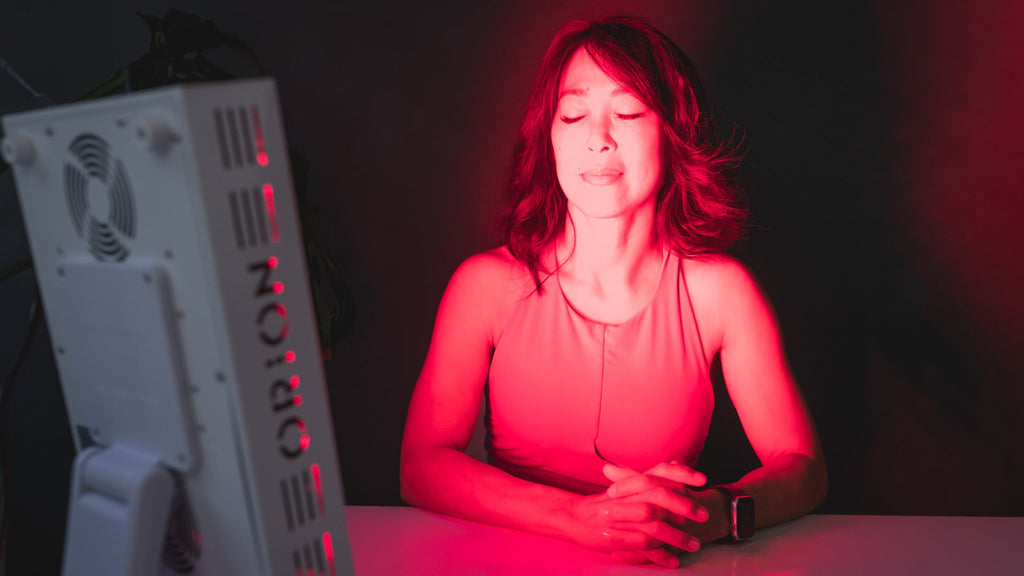
Orion panels pair red & near-infrared light in a Health Canada Licensed device, Designed in Canada. Every panel includes a 60-day home trial, so you can see how your skin responds before you commit.
Explore Orion PanelsHow to Use Red Light Therapy for Rosacea at Home
Rosacea-prone skin rewards a gentle start. Follow these guidelines as you build your routine:
- Start short. Begin with 5-minute sessions for the first two weeks, then build gradually to 10 minutes as your skin settles in.
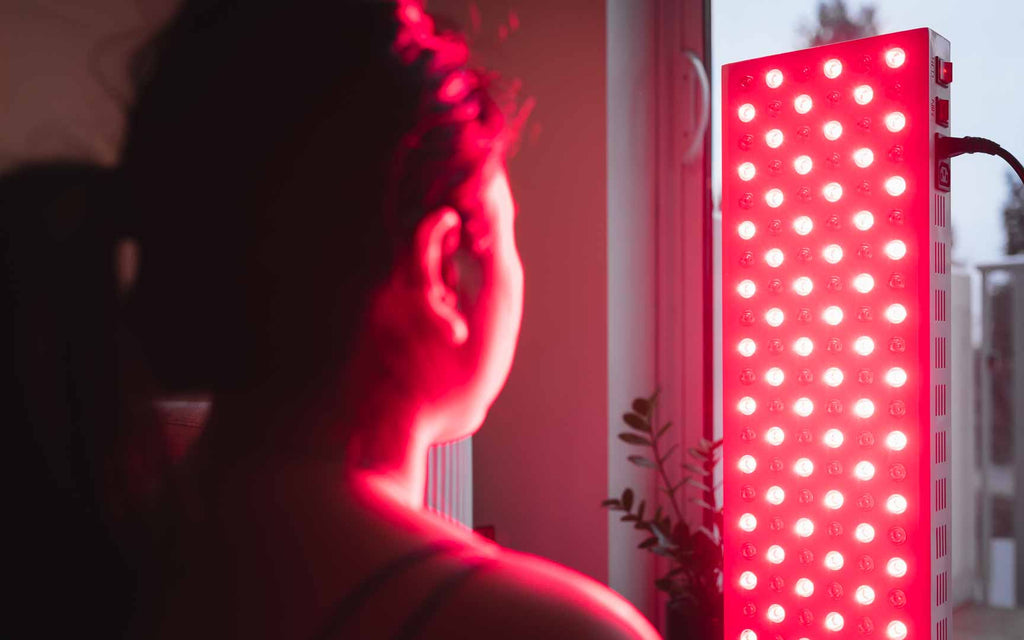
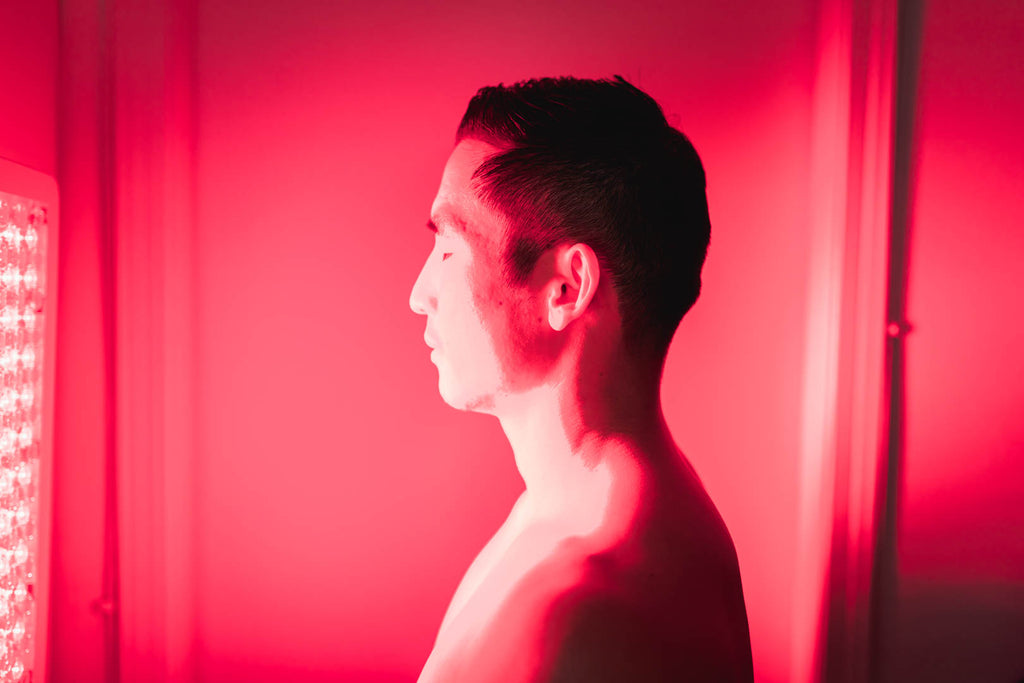
- Keep your distance. Position your face 12–18 inches from the panel. Your skin receives the light it needs while staying comfortable.
- Lead with red light. Red wavelengths (630–660nm) are the cornerstone for rosacea. If your panel allows, begin with red light and introduce near-infrared gradually.
- Find your rhythm. Aim for 3–5 sessions per week. Consistency builds results over time.
- Wait out a flare. If your skin is actively flushed, let it settle before your session.
- Start with clean, bare skin. Remove makeup and SPF first, then apply your usual gentle skincare afterwards.
- Protect your eyes. Always wear the protective eyewear provided during facial sessions.
For more on session length for facial routines, read how long to use red light therapy on your face.
Realistic Timeline for Calmer Skin
Rosacea is chronic, so changes build gradually. Here's what a typical timeline looks like with consistent use:
- Weeks 2–4: skin feels less reactive day to day, with less sensitivity to familiar triggers.
- Weeks 6–8: baseline redness begins to soften, and texture improves as the barrier strengthens.
- Weeks 10–16: the most meaningful changes, including fewer flares and greater overall resilience.
Everyone's skin responds at its own pace. Seasonal changes, stress and diet all influence rosacea, so expect some natural ups and downs along the way. Judge your progress over months rather than days.
Results are maintenance-based. Most people settle into 3–4 sessions per week long term to keep their skin calm. Take photos in the same natural light every few weeks to track your progress.
Building a Rosacea-Friendly Routine Around Red Light
Red light therapy works best alongside habits that keep triggers in check:
- Track your triggers. A simple log of flares, foods, weather and stress helps you spot patterns quickly.
- Cleanse gently. Use lukewarm water and a mild, fragrance-free cleanser. Pat skin dry rather than rubbing.
- Moisturize daily. A simple, fragrance-free moisturizer supports the barrier that red light helps strengthen.
- Wear mineral SPF. Sun is one of the most common triggers. Zinc oxide or titanium dioxide sunscreens are typically the gentlest choice.
- Keep cool. Avoid hot showers, saunas directly on the face and very hot drinks during flare-prone periods.
- Stay consistent. Schedule sessions on the same days each week so they become second nature. Here's why consistency beats intensity.
Frequently Asked Questions
Is red light therapy safe for rosacea-prone skin?
Yes. Red light therapy is non-invasive and gentle on sensitive skin. Start with 5-minute sessions at 12–18 inches and build gradually as your skin settles in.
Does red light therapy make rosacea worse?
LED panels deliver light rather than heat at the recommended distance, so sessions are comfortable for heat-sensitive skin. If you notice any warmth or flushing, step back from the panel and shorten your session.
What wavelength is best for rosacea?
Red light between 630 and 660nm is the cornerstone for rosacea. Near-infrared at 850nm complements it and can be introduced gradually.
How often should I use red light therapy for rosacea?
Aim for 3–5 sessions per week while building your routine, then 3–4 per week to maintain calm skin long term.
Should I use red light on my whole face or only the red areas?
Face the panel directly so light reaches your whole face evenly. Rosacea often extends beyond the most visible areas, and full-face sessions support the barrier everywhere, including the cheeks, nose, chin and forehead.
Can red light therapy help with flushing after exercise?
Red light therapy supports a calmer baseline, which helps skin recover more comfortably after exercise and other common flushing triggers. Schedule sessions once your skin has fully cooled down, rather than straight after a workout.
Will red light therapy clear rosacea completely?
Rosacea is a chronic condition, so ongoing care is part of managing it. Red light therapy supports a calmer baseline, softer redness and fewer flares, with consistent use keeping those results in place.
Can I use red light therapy with my rosacea skincare?
Absolutely. Red light therapy pairs well with dermatologist-guided routines. Apply your skincare after your session, and check with your dermatologist if you use products that increase light sensitivity.
The Bottom Line
Red light therapy for rosacea works on the drivers behind redness: calming inflammation, softening vascular reactivity and strengthening the skin barrier. Start gently, lead with red light, stay consistent and give your skin 10–16 weeks. Calmer skin is built session by session.
Ready to begin? Explore Orion's red light therapy panels, or read The Complete Guide to Red Light Therapy.
This article is for general wellness information and is not medical advice.